

The Right Rug Size for Every Room: A Home Stager's Guide
When I pulled items for a staging job, rugs were the one thing I never trusted to a single choice. We'd bring two or three options, sometimes in different sizes, always in the same color scheme, because the rug you're sure will work can look totally different once it's laid out with the furniture, in that room's light and at that room's size. Stagers get more choices than most people, and even we hedged. That's how much a rug matters: the right one makes a room come alive, and the wrong one leaves it dull and lifeless.
So rug shopping deserves more care than it usually gets. The good news is that the sizing part has real rules, and they're simple. Here they are, space by space — then a word about the trickier part, choosing.
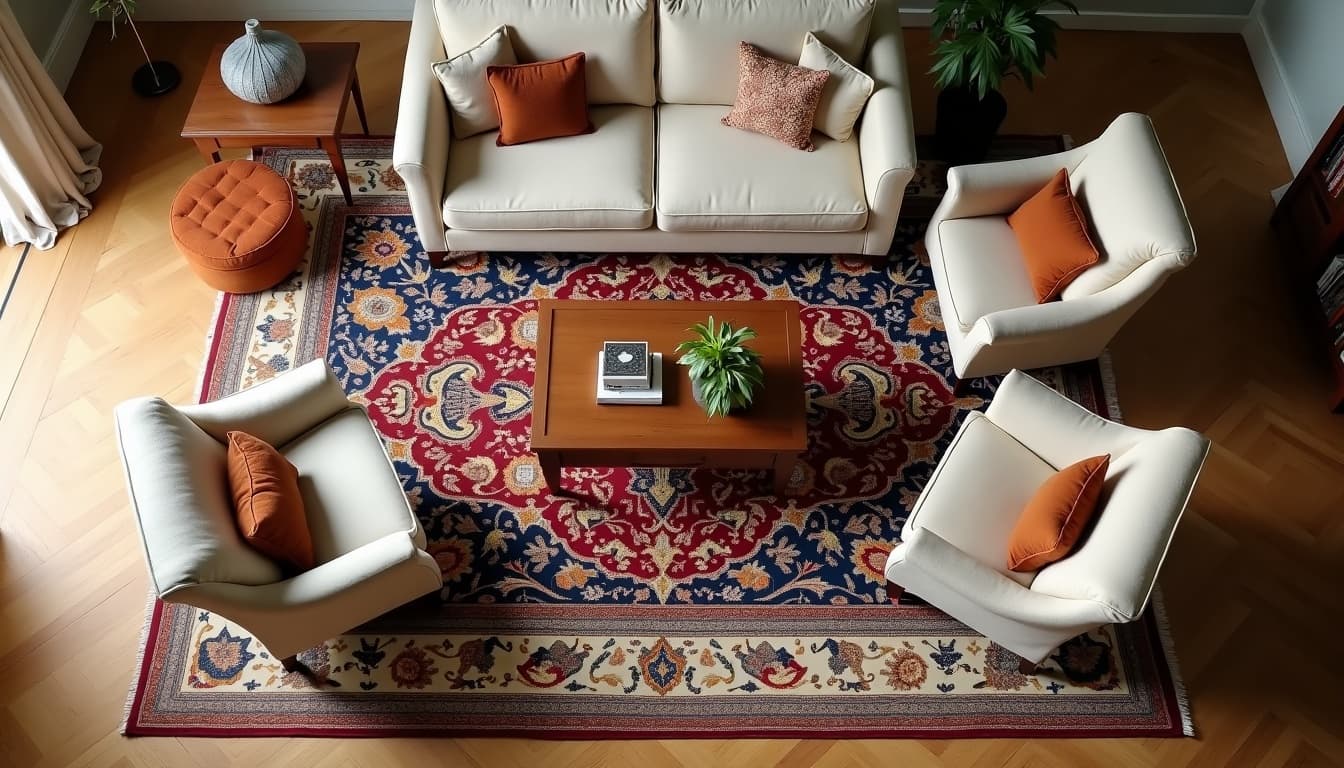
Living areas: front legs on
The front legs of every seat, sofa and chairs alike, should sit on the rug. That single rule ties the seating into one conversation area. For most living spaces it means an 8×10, because a 5×7 almost always reads as a bath mat that wandered in. Leave 12–18 inches of bare floor between the rug and the walls so it looks placed, not wall-to-wall.
Bedrooms: show rug around the bed
The rug should extend 18–24 inches past the sides and foot of the bed. That border is the part your bare feet actually use in the morning. Under a queen, an 8×10 with its top edge under the pillows does it. If a rug that size isn't in the budget, a runner along each side of the bed gets you the same soft landing for less.
Dining: the pulled-out chair test
Measure the table and add roughly 24 inches on every side. That's the size that keeps chair legs on the rug even when the chairs are pulled out, which is the test most dining rugs fail. If a rug can't pass it, the space honestly looks better with no rug at all.
Entries and hallways
A runner should leave a few inches of floor showing on each side and stop short of the door's swing. High-traffic spots want a flatweave or low pile, which sheds dirt, takes a beating, and won't catch the door.
Rugs are complements, not stars
Most people buy the furniture first and the rug after, and that's the right order. The room and the furnishings dictate what the rug should be, not the other way around. Subtle color under the furniture adds warmth and pulls the pieces together into something cohesive. If a bold statement rug is calling to you, make sure the rest of the room can quiet down around it, because most rooms are happier when the rug supports the cast instead of trying to lead it.
And since you probably can't haul three options home the way we did on staging jobs, buy from somewhere with easy returns and treat the first unrolling as an audition, not a verdict. A rug that disappoints with the furniture on it is not a failure of taste. It happens to professionals often enough that we planned for it.
A word on what it's made of
Wool wears the best and bounces back from furniture marks, which makes it worth the money in the rooms that get the most use. Flatweaves and low piles are the practical choice for dining areas, entries, and homes with kids or pets, since they clean easily and don't crush. And whatever you buy, buy the rug pad too. It stops the slide, protects the backing, and makes a mid-priced rug feel like it cost twice as much.
Yes, you can put a rug over carpet
If your space has wall-to-wall carpet you didn't choose, a rug on top is fair game. Keep the rug's pile lower than the carpet's so it doesn't feel like walking on a mattress, and anchor at least one edge under furniture so it stays put. The secret is the pad: use one made for rug-on-carpet, with a grippy face rather than the rubber kind meant for hard floors, and the rippling stops. It's the fastest way to make a carpeted room feel like yours.
PadGenie sizes product suggestions to your actual space, so the rug in your plan is one that passes these tests, not just one that matched the style.
Janet Gilbert staged homes for investors, sellers, and builders across Southern California for 11 years before co-founding PadGenie.