

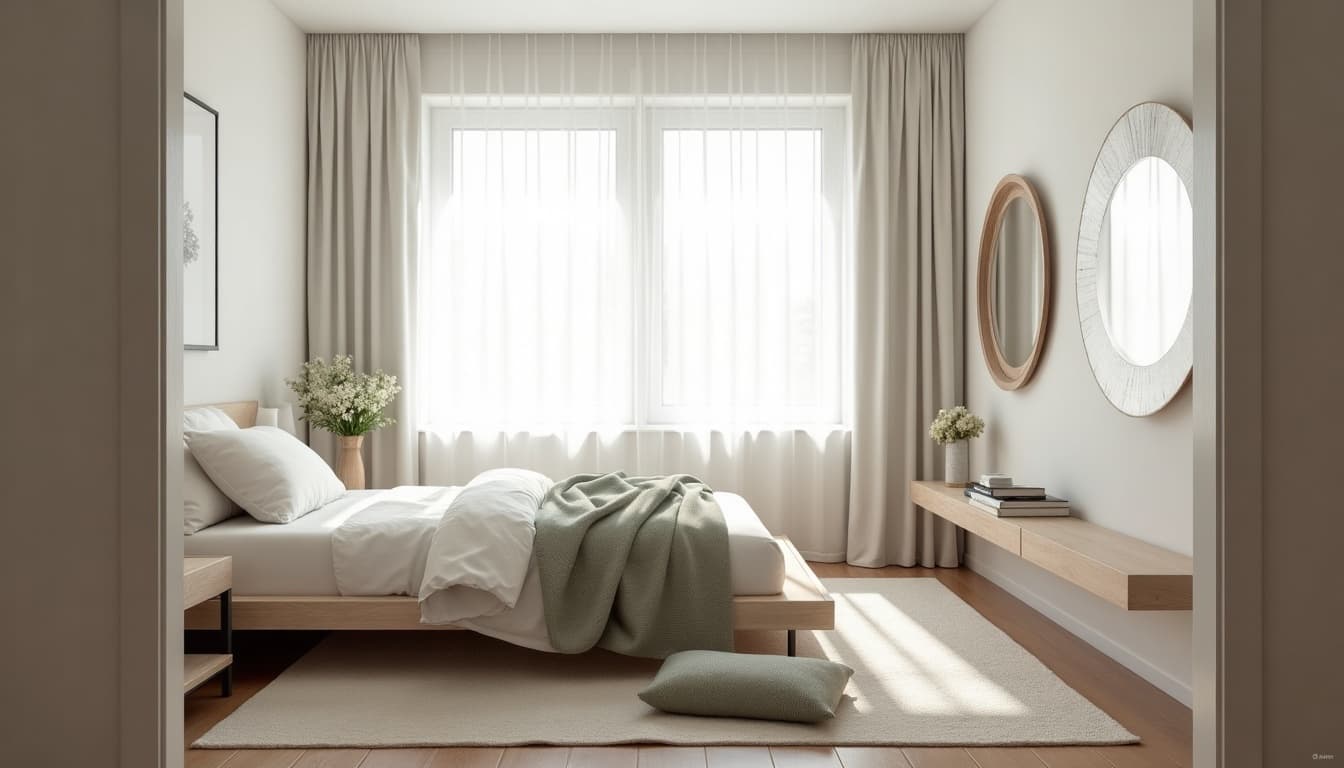
How to Make a Small Bedroom Feel Bigger (Without Moving a Wall)
Most bedrooms are small. That's worth saying up front, because people tend to apologize for a small bedroom as if it were unusual, then decorate apologetically to match: tiny rug, tiny art, everything pushed hard against the walls. The bedrooms that feel bigger than they are all cheat the same way, with scale, light, and height. None of it requires a contractor, and most of it is renter-safe.
Protect the good parts first
Before adding anything, notice what the room already gives you. A window, even a small one, is your best asset, so don't block it with furniture or bury it in heavy drapes. The same goes for light floors, ceiling height, and a clear path from the door to the bed. Every choice below should support those strengths, not fight them.
Seven moves that make it feel bigger
- Hang curtains high and wide.Mount the rod close to the ceiling and let it run 8–12 inches past the frame on each side. The window reads larger and the ceiling reads taller, and the room follows.
- Go low and light with the bed. A low-profile frame in a light finish leaves visible air above it. Tall, heavy headboards loom in a small room.
- Buy the bigger rug.It sounds backwards, but a rug that runs 18–24 inches past the sides of the bed makes the floor feel larger. A doormat-sized rug chops the floor into pieces.
- Put a mirror where the light is. Beside or across from the window, one large mirror doubles the daylight and adds depth. One big one beats three small ones.
- Keep the palette quiet. Low contrast lets the eye glide instead of stopping at every color change. Save the personality for pillows, art, and a throw.
- Float what you can. A wall-mounted or narrow-legged nightstand shows the floor underneath it, and visible floor is what your brain counts when it sizes up a room.
- Give every surface one job. A nightstand holding a lamp, a book, and nothing else will do more for the feeling of space than any new piece of furniture.
When in doubt, it's scale
A bed that sits too tall, a dresser too deep for its wall, six little things where one right-sized thing should be. Fewer, larger, lighter pieces win in a small room every time. Measure before you buy, and try to keep 24 inches of walking room around the bed.
And if you'd like a second opinion, PadGenie works from a photo of the actual bedroom, real window and real footprint included, so the plan fits the room you have rather than a bigger one you don't.