

What to Put on Your Walls Without Drilling a Single Hole
Bare walls make a home feel temporary. So does the fear of losing a deposit over a grid of nail holes, which is how renters end up living with both: blank walls and the nagging sense that the place never quite became theirs. Nearly everything a designer would put on your walls can go up without a drill, a nail, or a single hole. Here's what actually holds, what doesn't, and how to make it look intentional.
What holds what
- Adhesive strips hold more than you think,provided you follow the box. Check the weight rating, use more strips than feels necessary, clean the wall with rubbing alcohol first, and press each strip for a full thirty seconds. Most "the frame fell" stories skipped one of those steps.
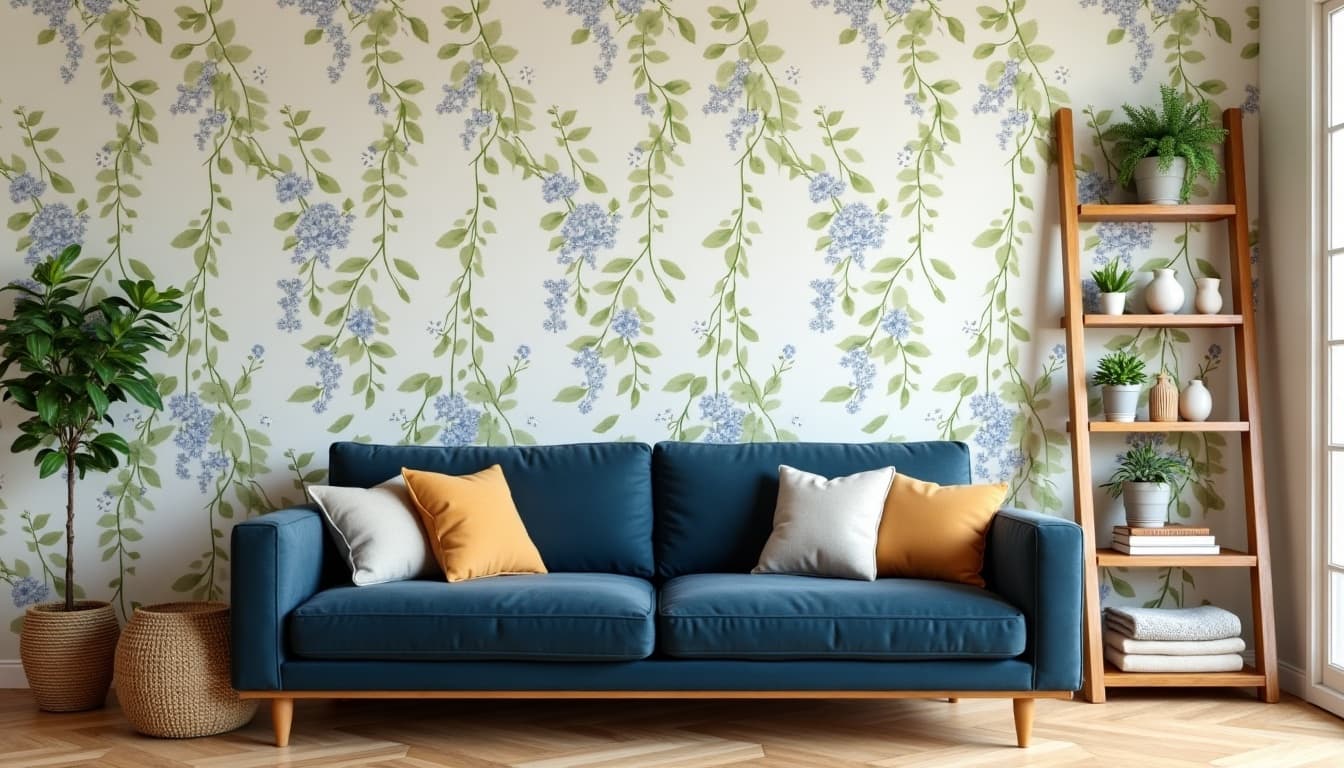
- Removable wallpaper is the biggest transformation per hour. One accent wall behind the bed or sofa changes the whole space. Order a sample first, test a corner for a week, and make sure the paint underneath is sound, because peel-and-stick is only deposit-safe on a finish that's in good shape.
- Tension rods are the quiet workhorse. Curtains in a doorless doorway, a fabric panel as a soft headboard, a gauzy divider in a studio. All spring-loaded, all traceless.
- Leaning shelves instead of mounted ones. A ladder shelf gives you three or four levels of display for plants, books, and art with zero hardware.
Make it look designed, not stuck on
Hang art at eye level, with the center of the piece around 57 to 60 inches from the floor, and resist floating one small piece alone on a big wall. For a gallery wall, cut paper templates the size of each frame and tape those up first. Move paper, not frames, until the arrangement works. Odd numbers group better than even, and one large piece beats five small ones on a wall that needs presence.
The honest warnings
Adhesive can pull paint off a poorly prepped or freshly painted wall, and on a cheap coat of paint it can tear the finish no matter how carefully you remove it. Test one strip somewhere hidden, and warm the strip with a hair dryer when it's time to remove it. Never trust anything heavy and glass to adhesive, whatever the weight rating says. Skip adhesive entirely on wallpaper, plaster, brick, and textured walls. That's where tension rods and picture hangers earn their keep.
My one exception: a very small hole
In eleven years of staging homes, we never once hung art with adhesive strips. Our tool was the no-mark picture hanger (OOK is the brand we always used), a small hook with a thin hardened-steel pin that goes into the wall at an angle and leaves a hole about the size of a pinhead. Sized right, one holds genuinely heavy art and even mirrors, and the hole disappears under a dab of spackle on move-out day. Most leases that forbid drilling are fine with pin-sized picture-hanger holes, but check yours. If it allows them, this is the sturdiest thing on this page, and a pack costs a few dollars.
Turn on renter-friendly mode in PadGenie and every wall idea in your plan already follows these rules: nothing that needs a drill, nothing your deposit would miss.
Janet Gilbert staged homes for investors, sellers, and builders across Southern California for 11 years before co-founding PadGenie.